
How Arab Hospitality Really Works
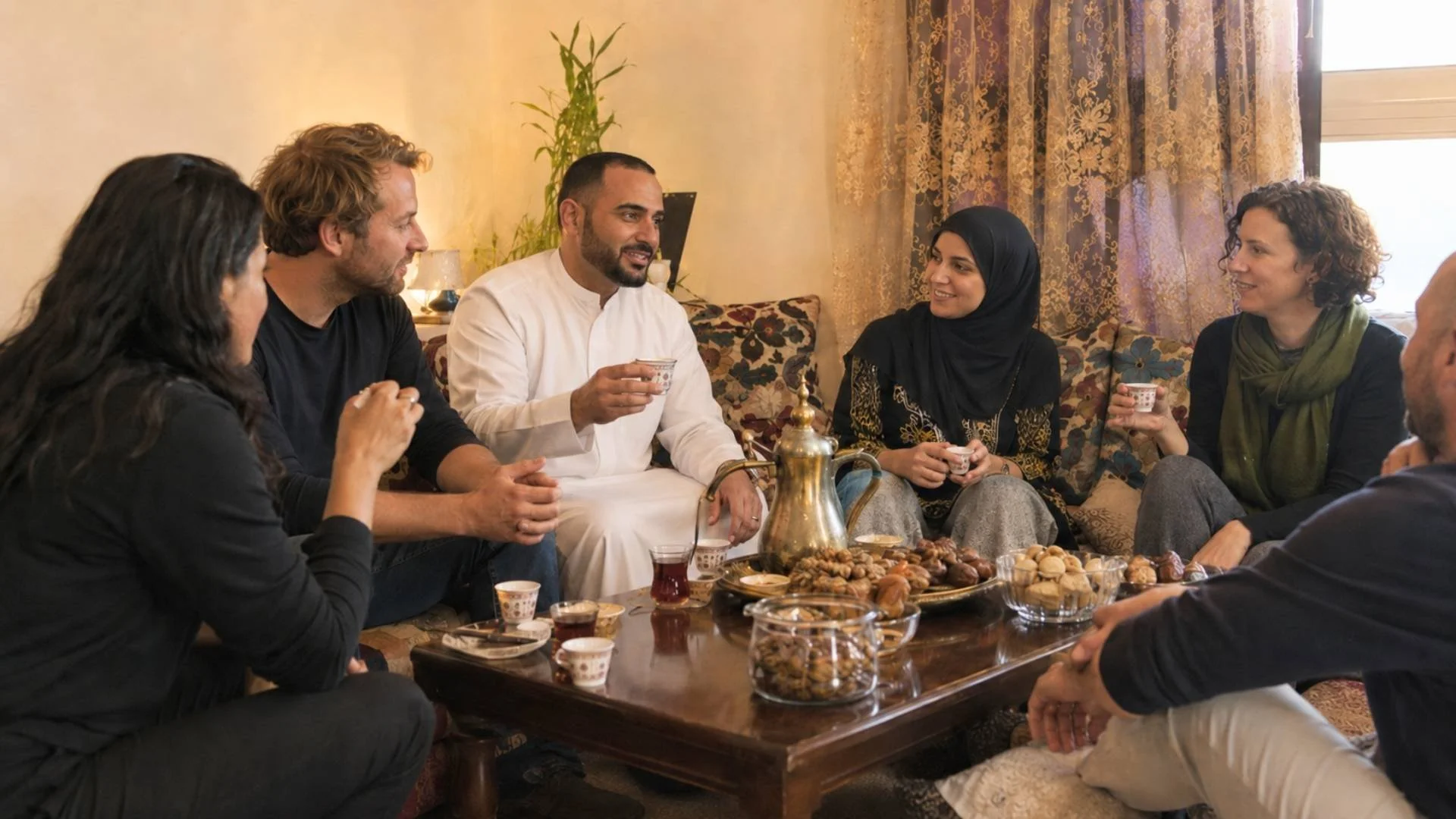
If you’ve recently moved to an Arab country, started working with Arab colleagues, or built relationships with locals, you will encounter this early on.
An invitation comes from a colleague, neighbor, or someone you have gotten to know. At first, it may seem like a polite gesture. Then it is repeated, followed up, and given a specific time. What began as a casual offer becomes a real plan, and before long, you are in their home, being welcomed and offered food and drinks.
It can feel unfamiliar if you are not used to it.
Arab hospitality follows a clear social rhythm. Once you understand it, the language, behavior, and expectations become easier to read.
This guide walks you through that experience step by step so you know what is happening, what people mean, and how to respond naturally.

Before the Visit: The Invitation
First Impressions: Hospitality Starts Before the Visit
Hospitality does not begin at the door. It starts before the visit is even confirmed.
You might hear:
لازم تزورنا (Laazem tzourna) - You have to visit us
This is often said by a colleague, neighbor, or someone you have interacted with more than once. While it can sound like a polite phrase, it is often meant sincerely. In many Arab contexts, invitations signal openness and a willingness to build a closer relationship.
If the invitation is repeated across different conversations, it usually means the host expects you to accept. Repetition is not casual. It shows intent.
When the Invitation Becomes Real
At first, you may treat the invitation as casual conversation or try to delay. The host often follows up and suggests a specific time. This signals a shift. The invitation is no longer informal. It becomes a social expectation.
This insistence reflects sincerity and interest in building a connection. Accepting the invitation strengthens that relationship. Repeated avoidance can create distance, even if unintentional.

Arriving at the House
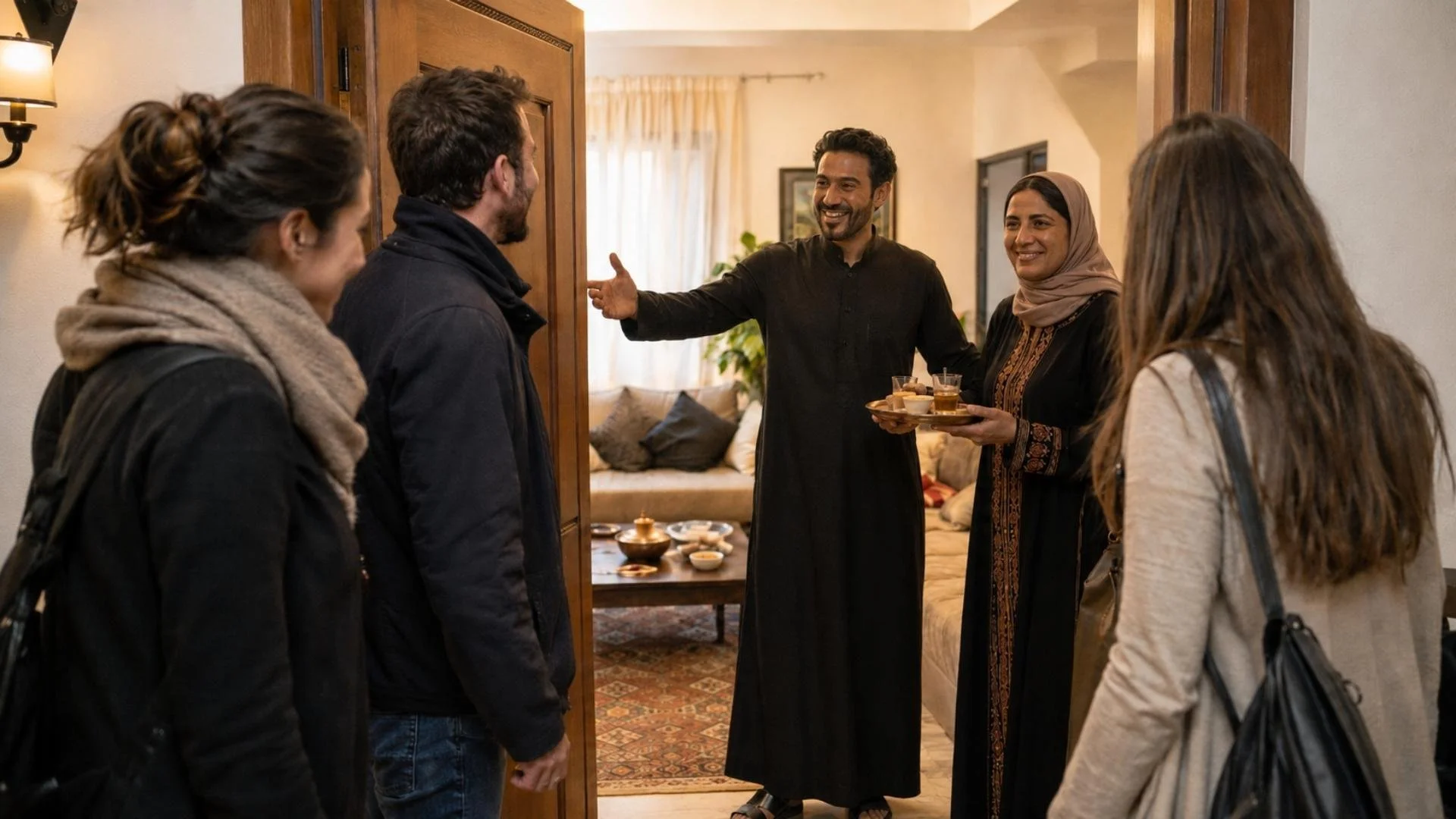
Immediate Warmth
When you arrive, the atmosphere is welcoming and open.
أهلًا وسهلًا (Ahlan wa sahlan) - Welcome
نورت (Nawwart) - You brought light
البيت بيتك (El beit beitak) - The house is yours
These expressions remove formality and create comfort. The intention is to make you feel at ease from the first moment. Guests are treated as part of the home, not as outsiders.
You may be guided to sit in a specific place, often the most comfortable spot. This is intentional. Giving the guest the best seat is a sign of respect.
You Sit… and It Begins
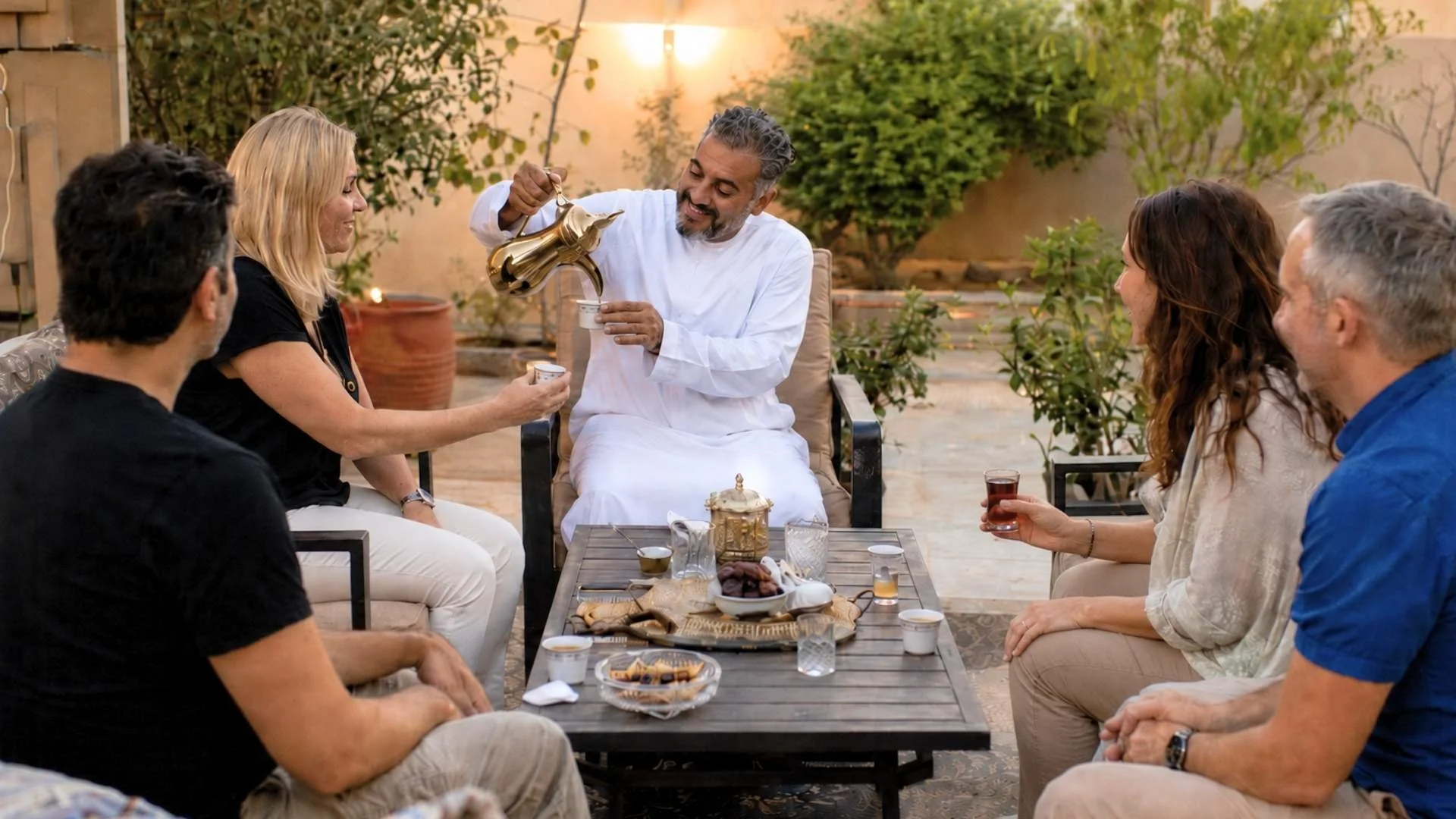
After you sit down, the host will quickly offer you something to drink or eat.
شو تشرب؟ (Shu teshrab?) - What do you want to drink?
قهوة أو شاي؟ (Ahwa aw shay?) - Coffee or tea?
تفضل (Tfaddal) - Go ahead
Offering refreshments is automatic. It is one of the first ways hosts show generosity.
If you say no, you will often be asked again. In many situations, an initial refusal is interpreted as politeness rather than a final answer. A second offer confirms whether you truly want to decline.
The Simple responses help keep the interaction smooth:
شكرًا (Shukran) - Thank you
يسلمو (Yislamo) - Bless your hands
If you want to understand and use these phrases confidently in daily conversations, start with a free trial class at 3arabian.
The Food Experience
Where Hospitality Shows Fully
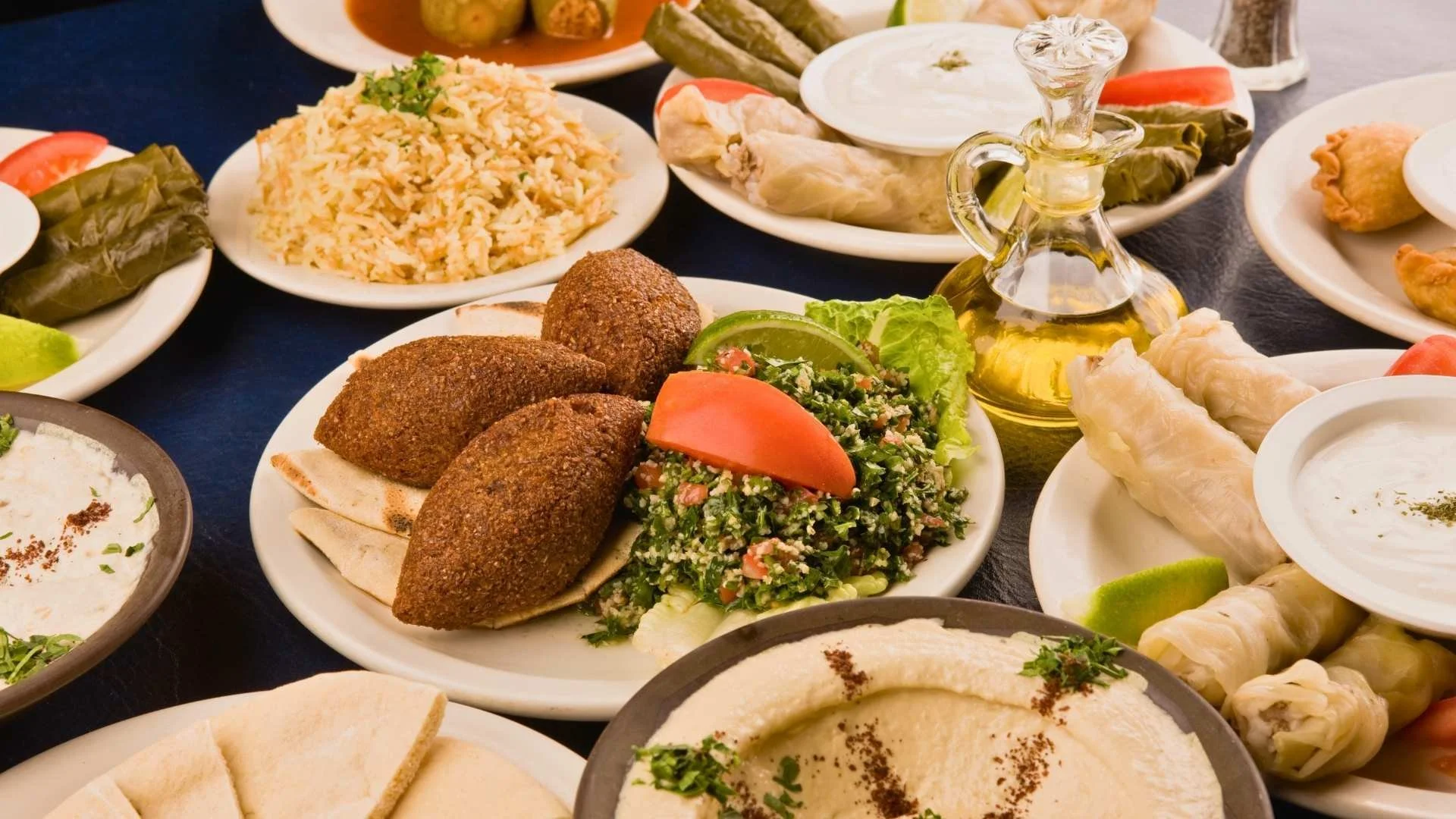
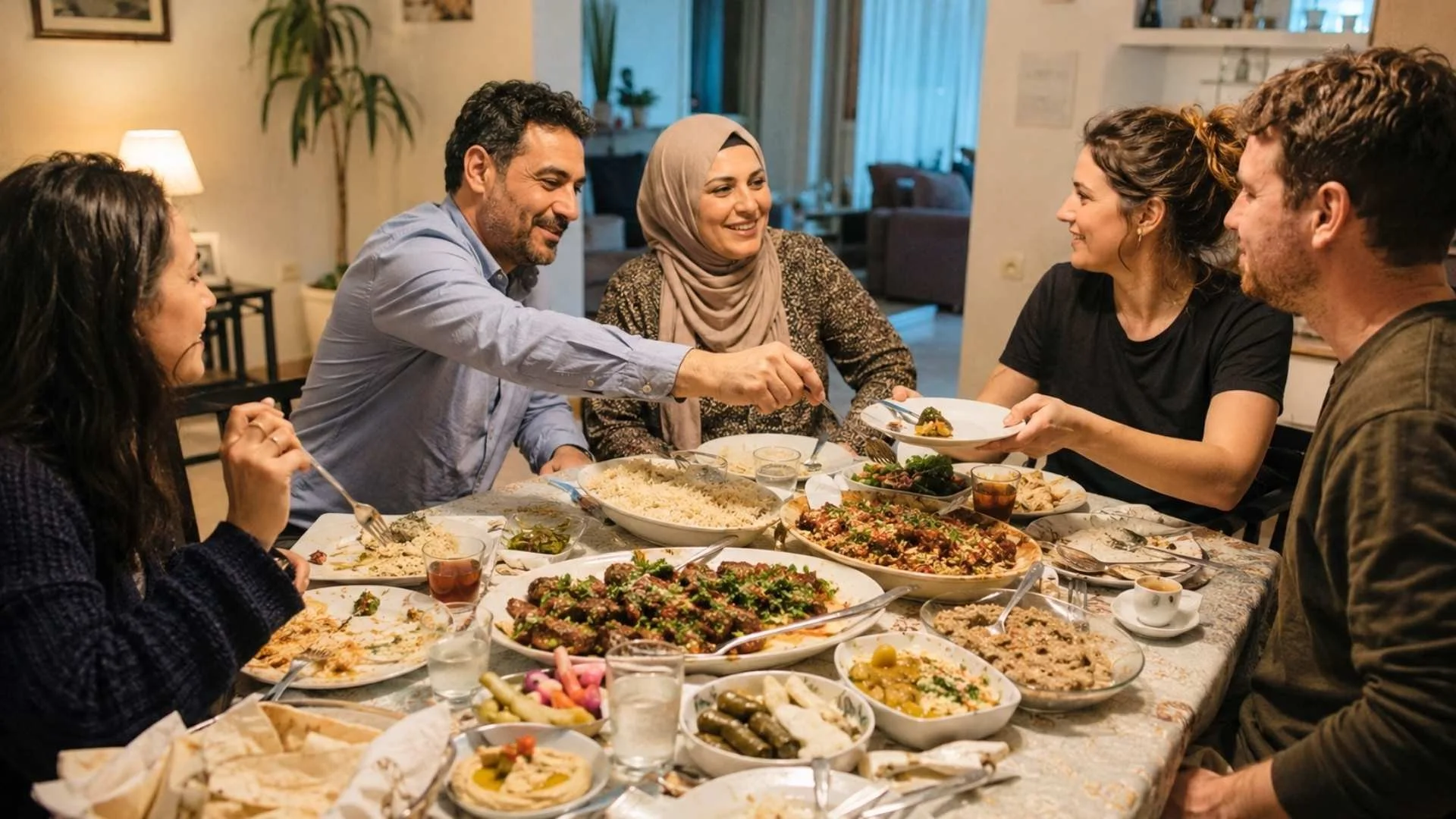
The food experience is the central part of Arab hospitality.
Food represents effort, pride, and generosity. Preparing a full table is a way of honoring the guest.
As you sit at the table, dishes are served continuously, and you will hear:
لازم تأكل (Laazem taakol) - You have to eat
كُل أكثر (Kol aktar) - Eat more
ما أكلت شي (Ma akalt shi) - You didn’t eat anything
Even if you have eaten enough, the encouragement continues.
In this context, a full guest reflects a successful host. If you stop too early, the host may feel they have not eaten enough. Repeated offers are not about pressure. They are about fulfilling a social role tied to care.
A Typical Table Flow
They serve you a plate. You take a small portion. The host adds more. You slow down. The host encourages again. Someone offers you a different dish. Another plate appears.
This sequence is normal.
What the Host Is Thinking
Did the guest eat enough?
Did we offer enough variety?
Did we show proper generosity?
Their focus is on your experience, not their convenience. That’s how they show they care.
How to Respond Naturally
Accept small portions instead of refusing everything.
Finish your plate, as it’s often seen as a sign of appreciation.
Use short appreciation phrases like “شكرًا” (Shukran), meaning Thank you!
Acknowledge their efforts with phrases like “طيّب كتير” (Tayyeb kateer), which means very delicious
You do not need to finish everything. You need to participate respectfully.
Saying No and Following the Host’s Lead
Can You Say No?
Sometimes saying no is possible, but it is usually indirect.
You may hear:
متأكّد؟ (Mit2akked?) - Are you sure?
This is a second invitation. It checks whether your first response was polite or final.
If you truly want to refuse, repeat your answer gently. Tone matters more than the words.
Examples:
لا، شكرًا (La, shukran) - No, thank you
شبعت، الحمد لله (Shabe3t, al7amdulillah) - I am full, thank God
A calm tone and a smile help your response be understood.
Eating Together: Small Things That Matter
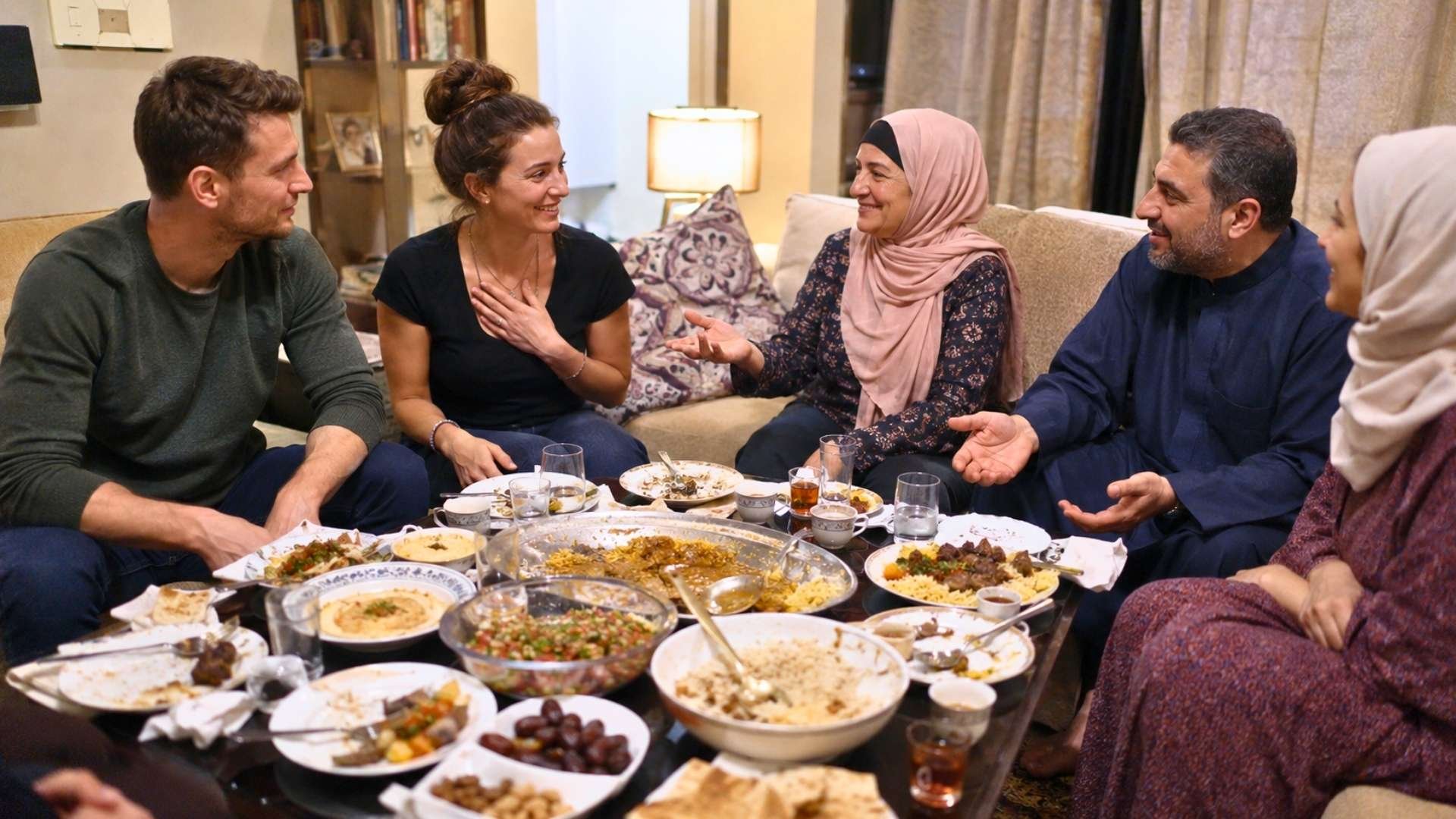
Meals are shared, and people naturally observe one another.
You do not need detailed etiquette knowledge, but a few behaviors help:
Follow the host’s lead
Start when they start
Try a bit of different dishes
Avoid leaving the table too early
These small actions signal awareness and respect.
Want to practice these situations before experiencing them in talks? Discover how 3arabian’s One-to-One online classes help you navigate everyday conversations.
Conversation and Leaving the House
Conversation & Atmosphere
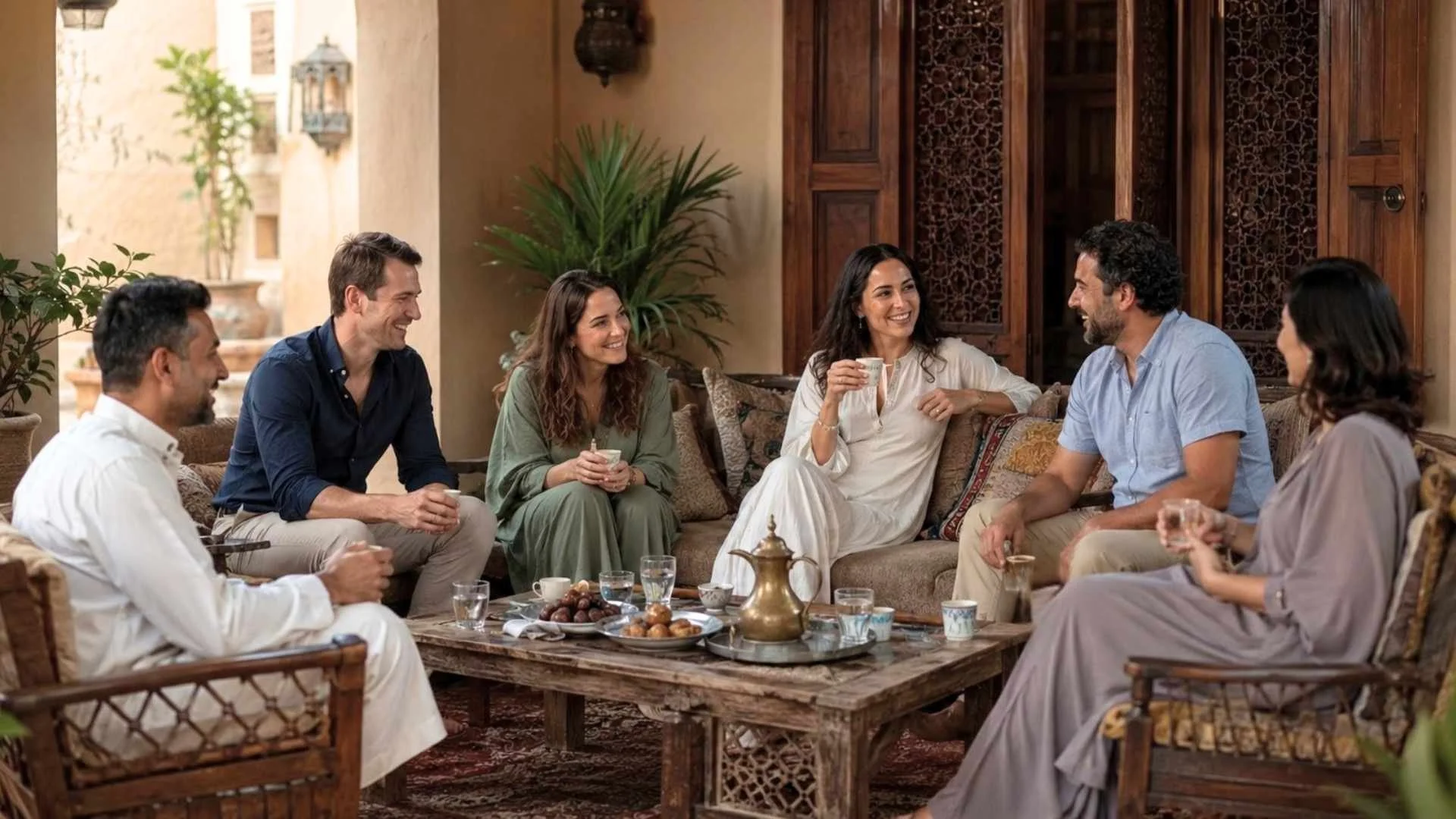
After the meal, the setting becomes more relaxed and conversational. This is where relationships begin to deepen.
Discussions are usually light, personal, and welcoming. Common topics include work, family, daily life, and shared experiences. The focus is on getting to know each other rather than exchanging information.
You may be asked questions about where you are from, how you are finding the country, or your experience with the language. These questions are meant to bring you into the conversation.
The tone is informal and inclusive. The host isn’t just hosting you, they’re welcoming you into a social setting.
Leaving the House
Leaving follows a gradual and polite process.
Hosts often encourage you to stay longer before you leave. This is part of the same pattern of generosity.
You can express appreciation using:
تسلم (Teslam) - Much appreciated. Bless you
الله يعطيك العافية (Allah ya3teek el 3aafye) - May God give you health
You may thank multiple times, and the host may respond by thanking you for coming. This exchange reinforces mutual respect.
What It All Really Means
Arab hospitality is not defined by food or repeated offers. It is defined by intention.
Generosity is expected. Hosting reflects personal character. Guests are treated as valued, not formal.
What may feel unfamiliar at first is a consistent system of care expressed through action.
Once you understand this system, the experience becomes easier to navigate and more meaningful to take part in.

If you want to move from understanding Arabic to actually using it in moments like these, start with a free trial class at 3arabian and learn how people really speak.