How to Choose the Best Online Arabic Classes for Beginners

Want to learn Arabic but don’t know where to start? You’re not alone.
Choosing a dialect, learning the alphabet, and finding a course that fits your schedule can feel overwhelming. But you don’t need to master every grammar rule before starting a conversation.
With the right approach, you can begin practicing useful Arabic expressions from your first lessons.
If you’re looking for online Arabic classes for beginners, this guide will help you compare learning methods, choose the right Arabic dialect, and find a course that matches your goals.
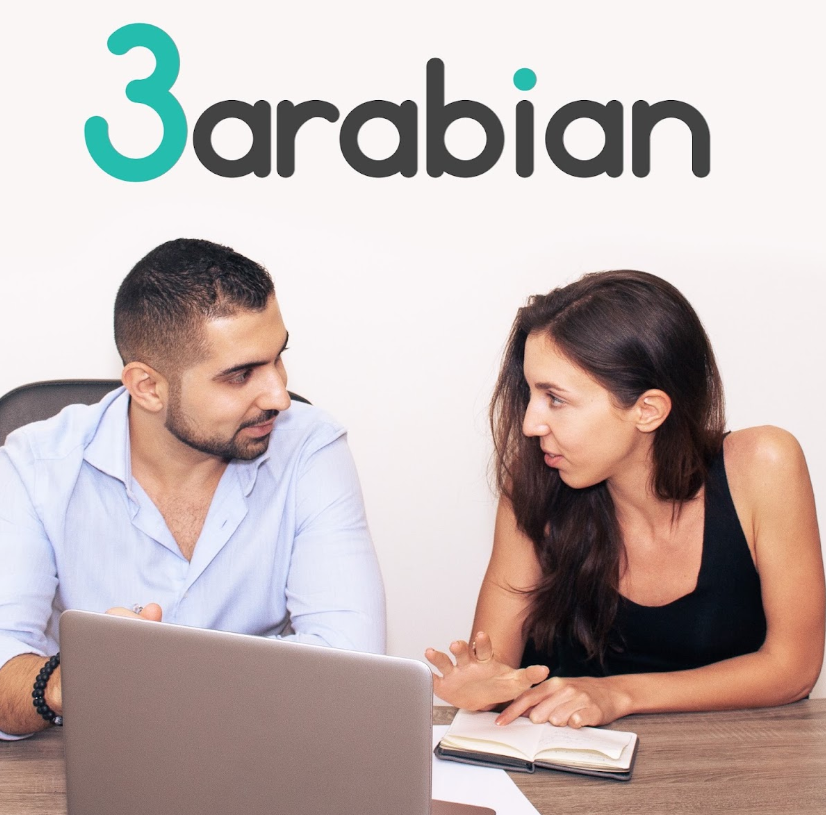
A good beginner Arabic course should help you build confidence while developing practical communication skills.
Before enrolling, look for these five features:
Qualified tutors: Teachers who explain concepts clearly and help you improve your pronunciation.
Personalized lessons: A learning plan tailored to your level, goals, and preferred dialect.
Speaking practice: Opportunities to use Arabic in real conversations rather than simply memorize vocabulary.
Flexible scheduling: Lessons that fit around your work, studies, and personal commitments.
Clear learning goals: A structured approach that helps you understand what you’re learning and how you’re progressing.
For many beginners, regular speaking practice and individual feedback can make learning easier to manage.

Online Arabic Tutoring vs. Language Apps vs. Recorded Courses
There are several ways to learn Arabic online. Each offers different benefits, and the best option depends on your goals, budget, and preferred learning style.
You don’t necessarily have to choose just one method. You could take live Arabic lessons and use an app to review vocabulary between classes.
Our recommendation: If your main goal is everyday conversation, prioritize a course that gives you opportunities to speak, ask questions, and receive feedback.


Arabic Classes in Dubai: Online or In-Person?
If you’re living in Dubai or elsewhere in the UAE, you might be deciding between online Arabic lessons and in-person classes.
Both formats can work well, depending on your schedule and learning preferences.
Which Arabic Dialect Should Beginners Learn?
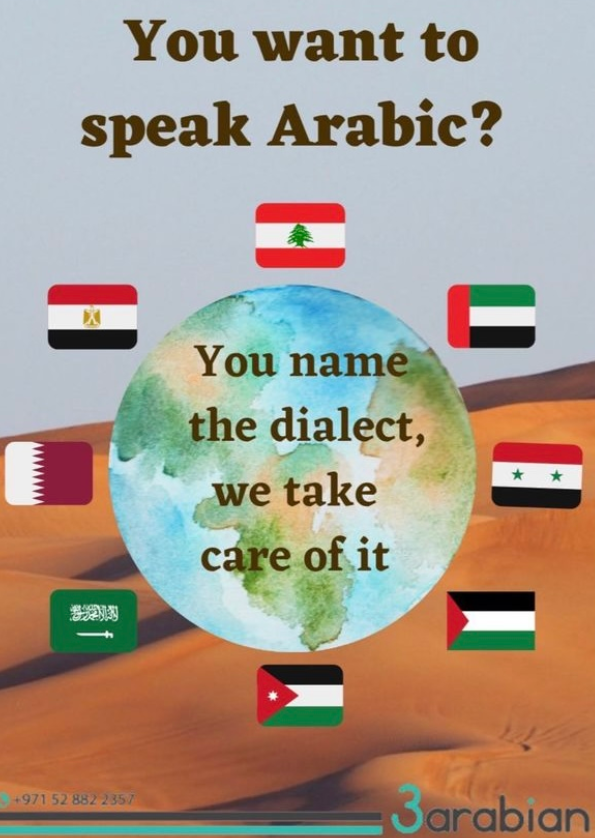
Arabic isn’t spoken exactly the same way across every country. Regional dialects differ in pronunciation, vocabulary, and everyday expressions.
The right choice depends on where you plan to use Arabic and whom you want to communicate with.
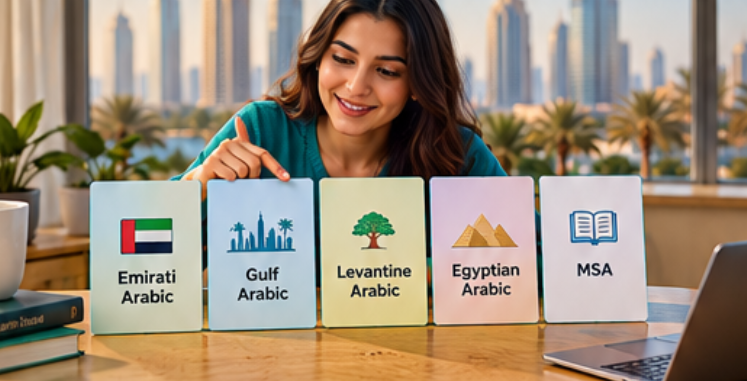
Emirati Arabic: Useful for people living in the UAE who want to communicate more naturally with Emirati friends, colleagues, and local communities.
Gulf Arabic: Relevant for learners who regularly interact with people from Gulf countries, although individual Gulf dialects differ.
Levantine Arabic: Spoken in Lebanon, Syria, Jordan, and Palestine.
Egyptian Arabic: Useful for communicating with Egyptian speakers and understanding Egyptian films and entertainment.
Modern Standard Arabic (MSA): Primarily used in formal writing, news, education, and official communication.
For example, someone working in Dubai may prioritize Emirati Arabic, while someone with Lebanese relatives may prefer Levantine Arabic.
If you want to focus on everyday conversation, consider starting with the dialect most relevant to your life rather than trying to learn every dialect at once.

What Is Neutral Spoken Arabic?
What if you want to communicate with Arabic speakers from different countries?
Learning one regional dialect is a useful starting point, but you may encounter different expressions when speaking with people from other regions.
3arabian offers 3arabEasy™, its neutral spoken Arabic learning approach, designed to help learners communicate across Arab communities.
Whether you choose a regional dialect or a neutral spoken approach depends on your goals, the people you interact with, and the situations in which you plan to use Arabic.
If you’re unsure, you can discuss your goals with a tutor before choosing a learning plan.
How Much Do Online Arabic Classes Cost?
The cost of online Arabic classes varies depending on the provider and the type of course.
Factors that influence pricing include:
Private tutoring versus group lessons.
Lesson duration and frequency.
Tutor qualifications and experience.
Personalized learning materials.
The number of lessons included in a package.
When comparing courses, don’t focus only on the price per lesson. Consider whether the course includes speaking practice, individual feedback, and a learning plan that matches your goals.
3arabian’s private online Arabic lessons offer personalized instruction, with 45- or 60-minute sessions available. Check the current packages to compare the options.
The right course is one that fits both your budget and your learning needs.
How Long Does It Take to Start Speaking Arabic?
There’s no fixed timeline for learning Arabic. Your progress depends on your starting level, lesson frequency, learning goals, and how regularly you practice.
However, you don’t need to understand every grammar rule before beginning a conversation.
Here are three expressions you can start practicing:
Marhaba (مرحبا) — Hello.
Shukran (شكراً) — Thank you.
Keefak (كيفك) — How are you? Used when addressing a male in Levantine Arabic.
As you progress, you can learn to introduce yourself, order food, ask questions, and discuss everyday situations.
Try reviewing new expressions between lessons and using them in short conversations. Even a few minutes of regular practice can help reinforce what you’ve learned.
Why Choose 3arabian for Online Arabic Classes?
3arabian provides personalized Arabic lessons with native Arabic tutors. Lessons can be tailored to your level, learning goals, and preferred dialect.
Depending on your chosen course, you can benefit from:
Live, one-to-one online Arabic lessons.
Flexible scheduling.
Personalized learning plans.
Regional dialect options and neutral spoken Arabic.
Learning materials and interactive activities.
Online classes and in-person options in the UAE.
The aim is to help you learn Arabic in a way that relates to your everyday life, whether you’re learning for work, travel, family, or personal interest.
Explore 3arabian’s private Arabic classes to learn more about the teaching approach and available options.
A Real Student Experience
Learning a language takes time, and every student’s progress is different. Hearing from other learners can help you understand what the learning experience may look like.
On its website, 3arabian shares student experiences highlighting personalized lessons, supportive tutors, and practical communication skills.
For example, student Dana described how her previous experience learning formal Arabic had left her struggling with simple everyday expressions. She appreciated 3arabian’s focus on modern spoken Arabic.
Individual experiences aren’t a guarantee of particular results, but they can help you decide whether a teaching approach fits your goals.
You can read more on the 3arabian website.
Frequently Asked Questions
Can I learn Arabic online as a complete beginner?
Yes. Beginner-friendly online Arabic classes can introduce basic vocabulary, pronunciation, greetings, and simple conversations gradually. You don’t need previous experience to get started.
Do I need to learn the Arabic alphabet first?
Not necessarily. If your immediate goal is conversation, you can begin with spoken Arabic while gradually learning to read and write. If reading and writing are your priorities, start learning the alphabet early.
How many Arabic lessons should I take per week?
One or two lessons per week can be a manageable starting point for many learners. Your ideal frequency depends on your goals, availability, and opportunities to practice between classes.
Is Modern Standard Arabic better than a dialect?
Neither is universally better. Modern Standard Arabic is useful for formal reading and writing, while regional dialects are generally more practical for everyday conversations. Choose according to your goals.
Can I try an Arabic class before enrolling?
Yes. 3arabian offers a free online trial class where you can meet a tutor, discuss your learning goals, and experience the teaching approach. In-person trial classes have separate fees and arrangements, so check the current details on the official website.
Start Learning Arabic with 3arabian
Choosing the right Arabic course isn’t just about finding lessons online. It’s about finding a learning approach that helps you build confidence, practice regularly, and communicate more naturally.
Whether you’re based in Dubai or learning from elsewhere, start by identifying your goals and choosing a course that suits your needs.
Ready to take the first step?
Book your free online Arabic trial class with 3arabian and discuss your goals with a tutor.
Learn. Speak. Connect.