The Most Dramatic Arabic Phrases
Arabic does not always say things gently.
Sometimes, instead of saying “I’m tired,” Arabic speakers say, “My breath got cut off.”
Instead of saying “You scared me,” they say, “My heart stopped.”
And instead of calling something a small problem, they might call it a full disaster.
Across different Arabic dialects, people use dramatic phrases to show shock, frustration, love, exhaustion, embarrassment, excitement, and disbelief. Some phrases sound huge, even when the situation is small, and that is exactly what makes them so entertaining.
In this blog, we are looking at dramatic Arabic phrases that native speakers use in everyday conversations, with Arabic script, dialect labels, meanings, and cultural context. You will see expressions from Egyptian Arabic, Levantine Arabic, and Gulf Arabic, along with examples of how they are used.
Let’s get into some of the most dramatic Arabic phrases you might hear in conversation.
The Most Dramatic Arabic Phrases
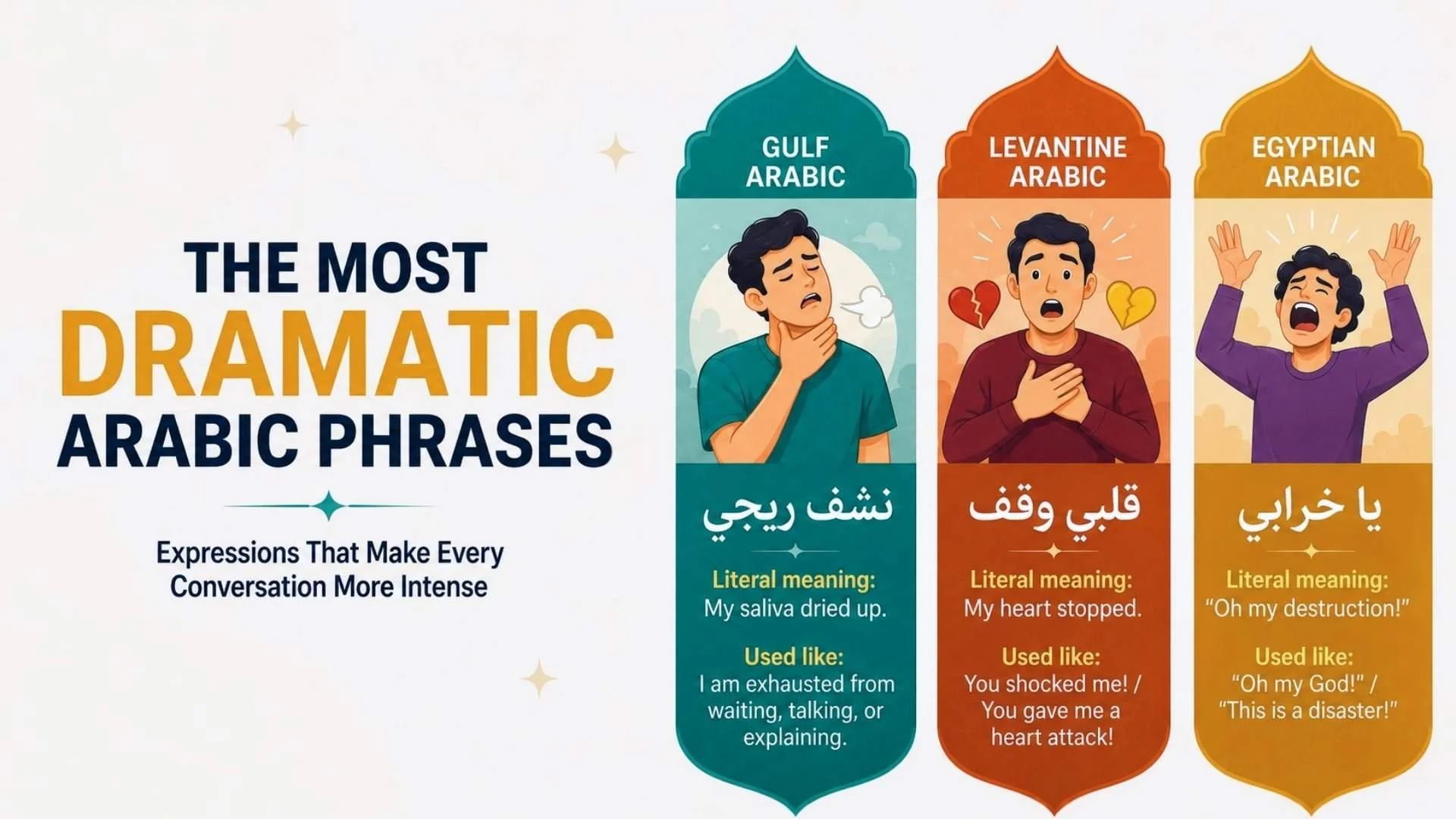
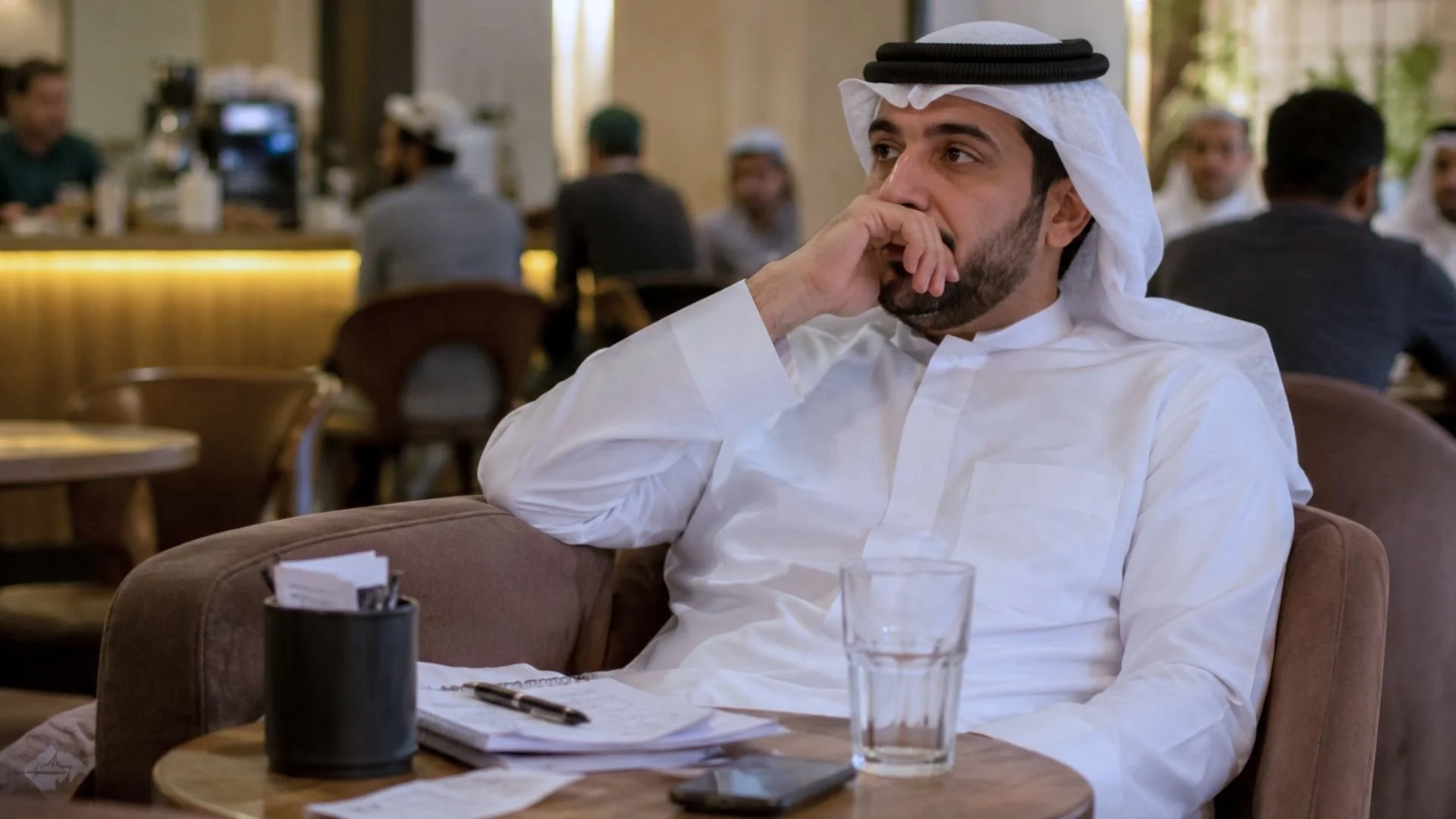
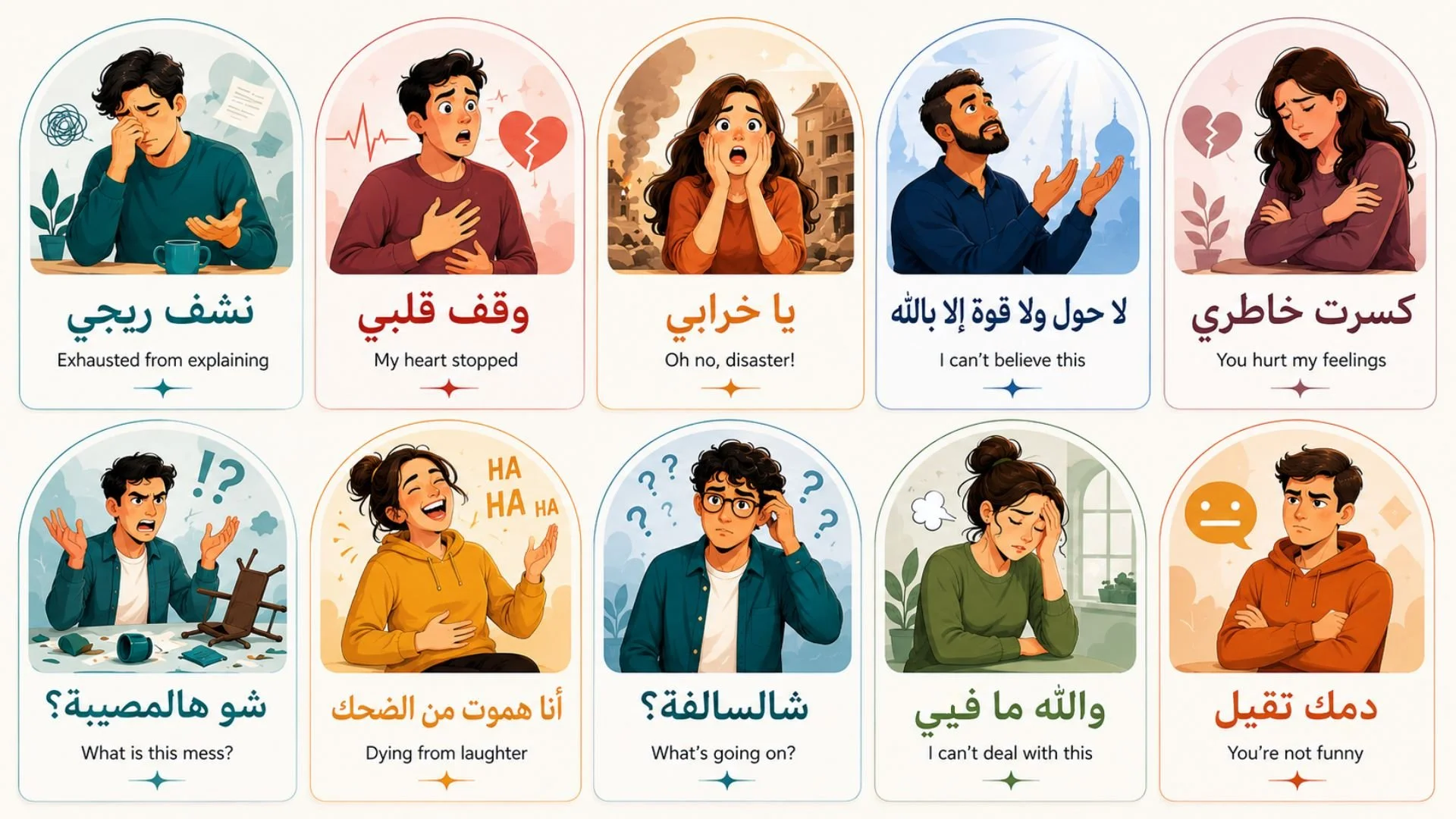
1.“Nashaf reegi” (نشّف ريجي)
Dialect: Gulf Arabic
Literal meaning: “My saliva dried up.”
Used like: “I am exhausted from waiting, talking, or explaining.”
This is a dramatic way to say you are tired of repeating yourself, waiting too long, or explaining something over and over.
For example: “I explained it ten times... Nashaf reegi.”
2. "Albi wa2af” (قلبي وقف)
Dialect: Levantine Arabic
Literal meaning: “My heart stopped.”
Used like: “You gave me a heart attack! / I was shocked!”
This phrase is used when something scares, shocks, or surprises you.
Someone jumps out from behind a door? Albi wa2af!
You almost dropped your phone? Albi wa2af!
You hear unexpected news? Albi wa2af!
3. “Ya kharaabi!” (يا خرابي)
Dialect: Egyptian Arabic
Literal Meaning: “Oh my destruction!”
Used Like: “Oh my God!” / “This is a disaster!”
This is peak Arabic drama.
Egyptians use it when something shocking, frustrating, or unbelievable happens
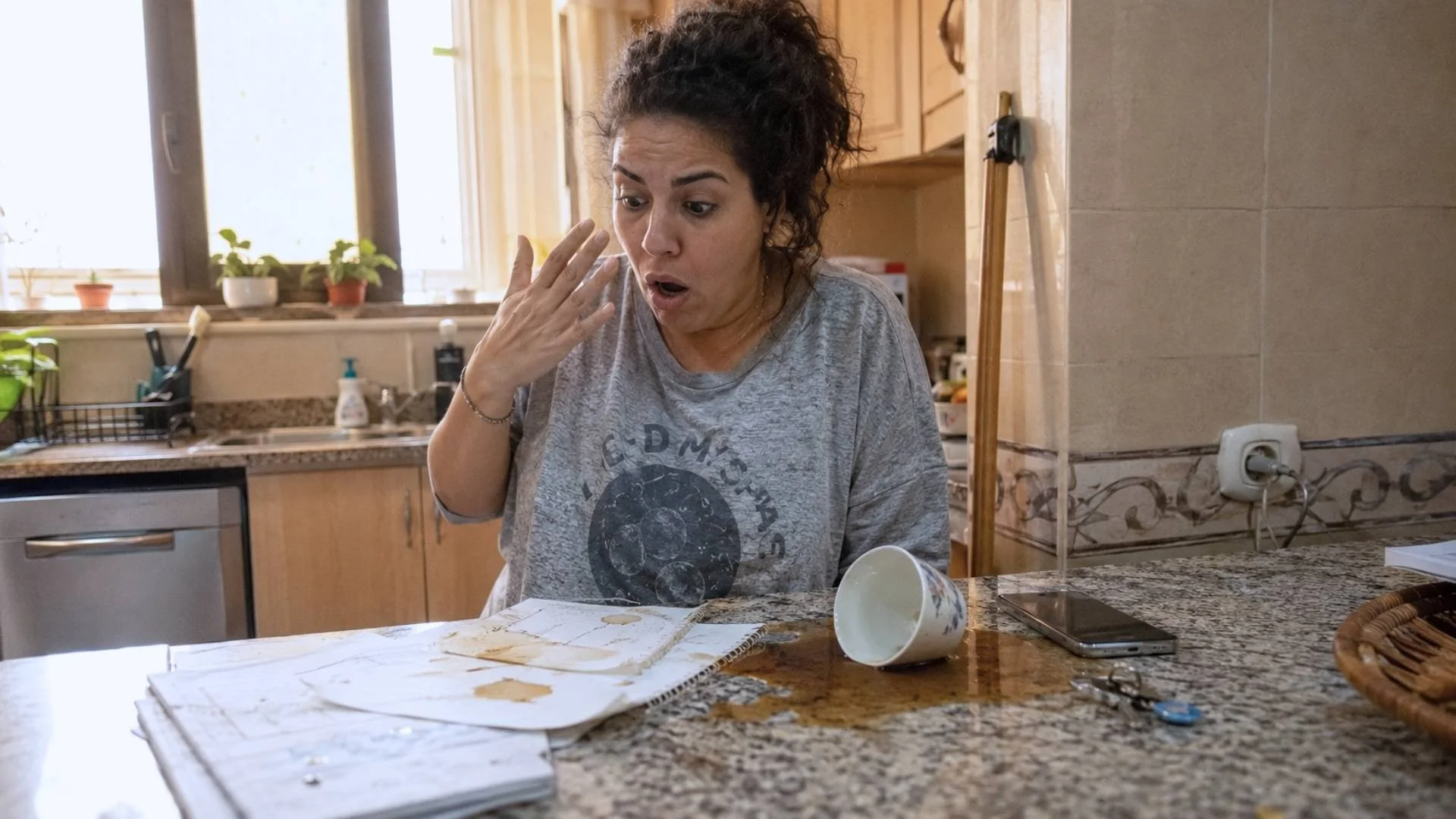
Spilled coffee? Ya khaarabi!
Missed your flight? Ya khaarabi!
It sounds catastrophic, even when the situation is minor. It is dramatic, emotional, and very Egyptian.
4. “La 7awla wala quwwata illa billah.” (لا حول ولا قوة إلا بالله)
Dialect: Used across many Arabic-speaking communities
Literal Meaning: “There is no power nor strength except through God.”
Used Like: “I cannot believe this” / “What can you do?”
This phrase has religious roots, but it is also widely used in everyday speech to express frustration, disbelief, or resignation.
The tone can change the feeling.
If said calmly, it can sound reflective. But if it’s said with frustration, it can sound deeply dramatic.
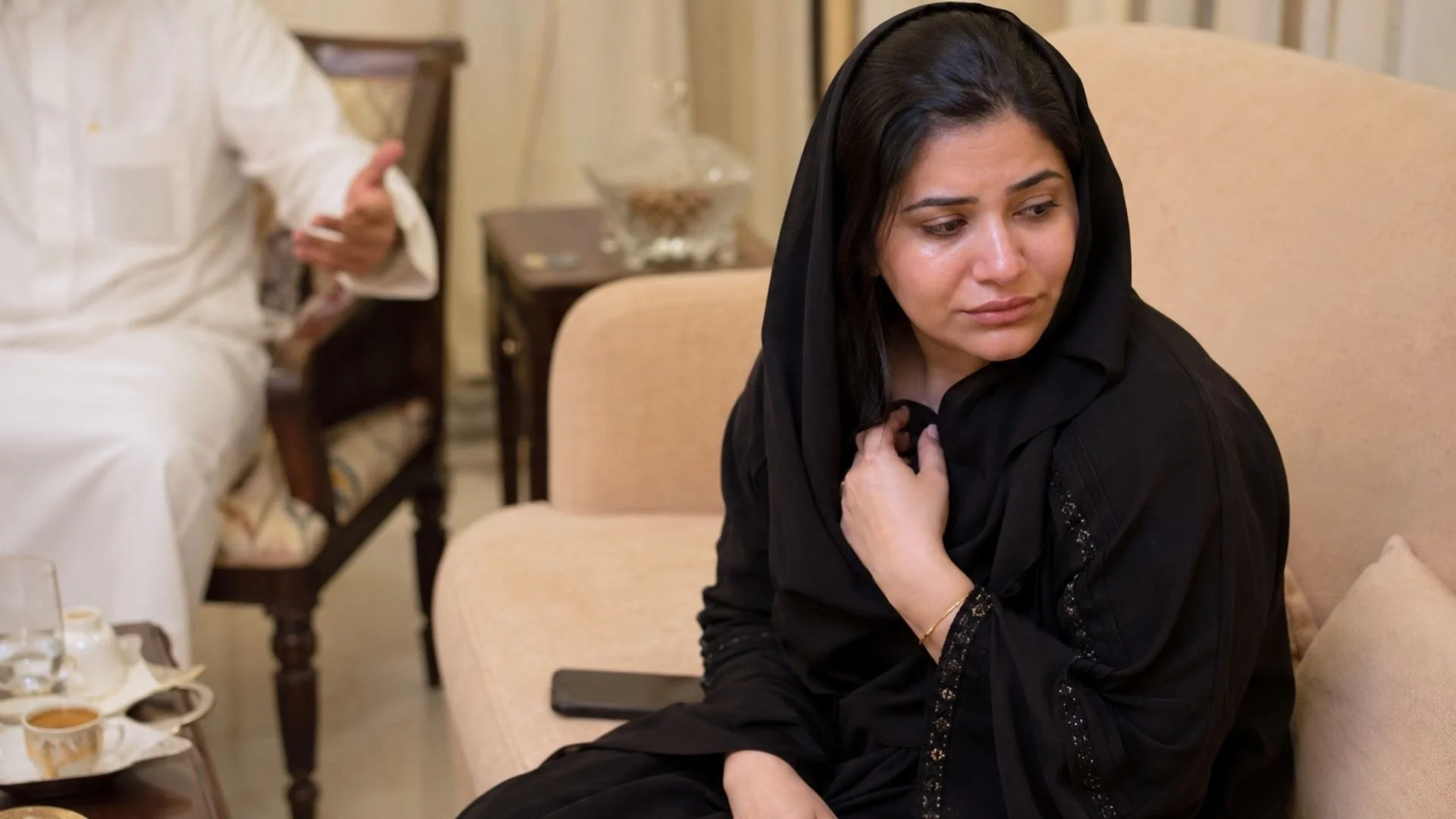
5.“Kasart khaatri” (كسرت خاطري)
Dialect: Gulf Arabic
Literal meaning: “You broke my heart.”
Used like: “You made me sad / I felt sorry because of you.”
It is used when someone makes you feel hurt, disappointed, or emotionally touched in a sad way.
A free trial class helps you explore the right Arabic dialect for your goals and experience 3arabian’s conversation-focused teaching style.
6. "Shu hal museeba?" (شو هالمصيبة)
Dialect: Levantine Arabic
Literal Meaning: “What is this disaster?”
Used Like: “What is this mess?”
One of the most iconic Arabic overreactions. Arabic speakers love using disaster vocabulary for situations that are nowhere near disasters.
Messy room? Shu hal museeba.
Bad haircut? Shu hal museeba.
Terrible group project? Definitely shu hal museeba.
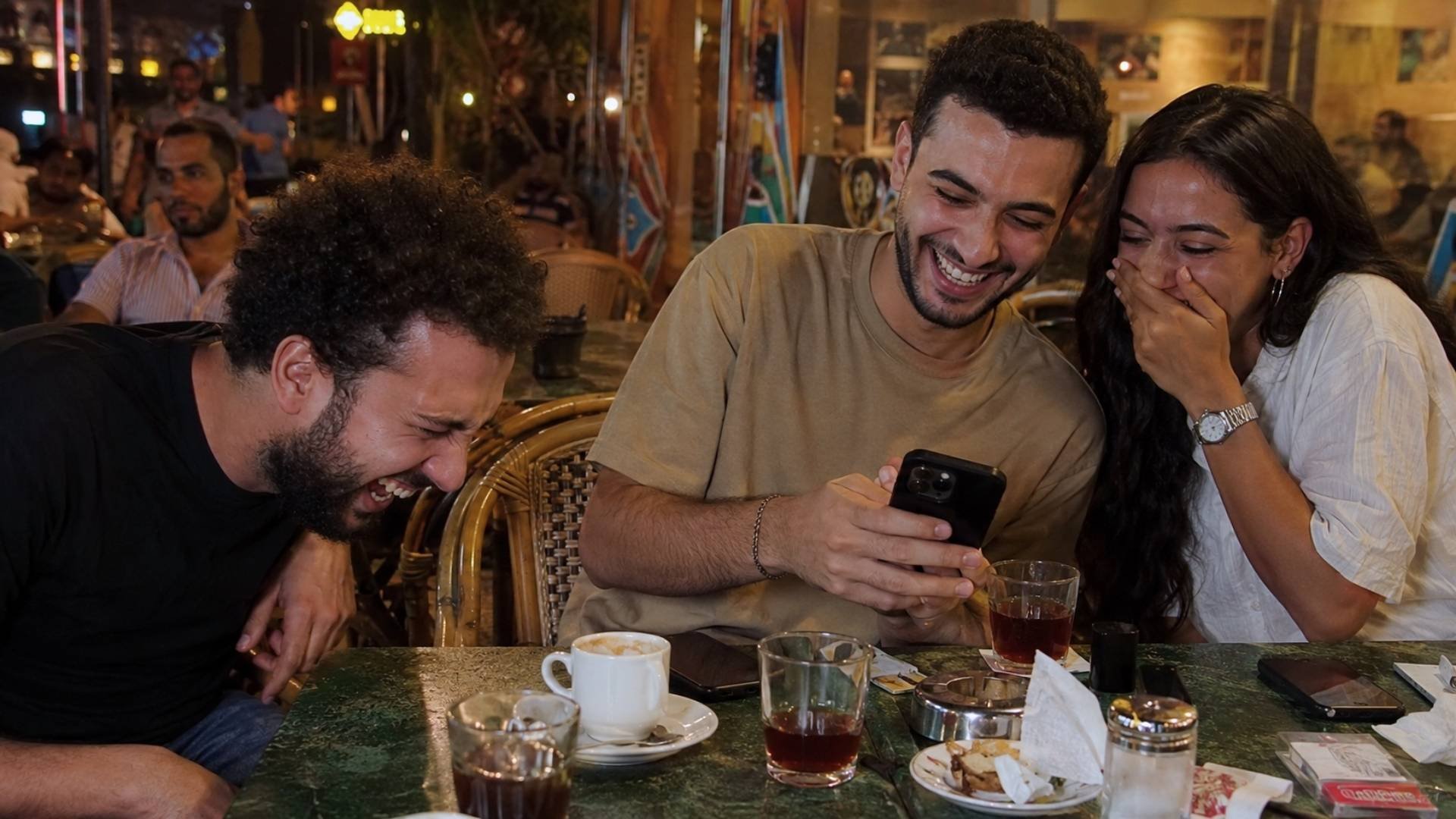
7. "Ana hamoot min el-de7k” (أنا هموت من الضحك)
Dialect: Egyptian Arabic
Literal meaning: “I am going to die from laughing!”
Used like: “I am dying of laughter!”
Egyptian Arabic is full of expressive humor, and this phrase is one of the best examples.
Instead of simply saying “That was funny,” you say: Ana hamoot min el-de7k.
It sounds dramatic because it is supposed to. You are not literally dying. You are just laughing so hard that normal words are not enough.
This is a very natural phrase to use when a joke, meme, or situation is ridiculously funny.
8.“Shas-saalfa?” (شالسالفة؟)
Dialect: Gulf Arabic
Literal meaning: “What is the story?”
Used like: “What is going on? / What is the problem?”
This is one of the most useful Gulf phrases. It can be casual, curious, annoyed, or dramatic depending on tone.
Someone walks in looking stressed. Shas-saalfa?
Everyone is arguing? Shas-saalfa?
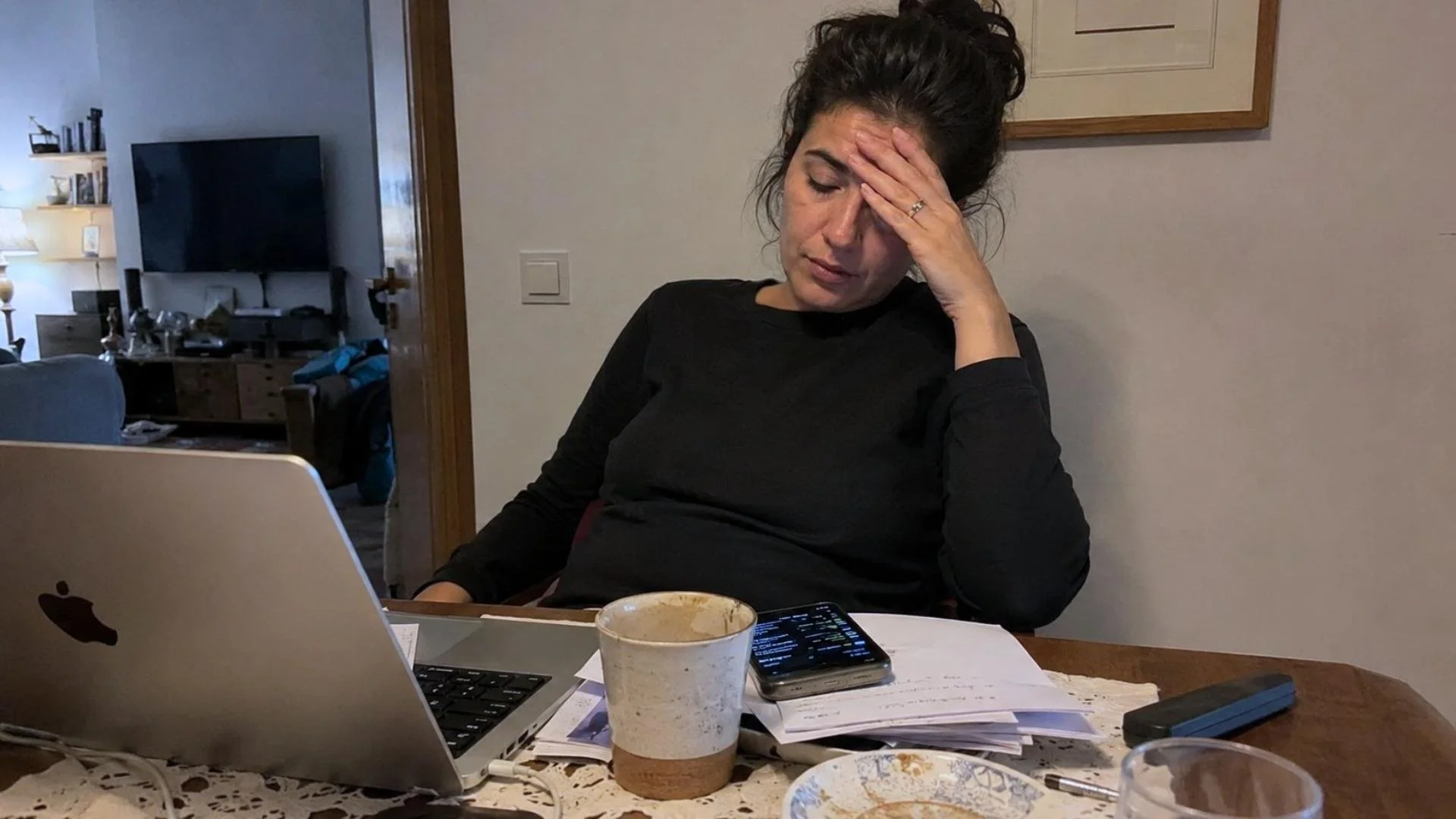
9. “Wallah ma fiyye” (والله ما فيّي)
Dialect: Levantine Arabic
Literal meaning: “By God, I do not have it in me...”
Used like: “I seriously cannot deal with this...”
This common phrase carries the feeling of being completely done, whether emotionally, mentally, or physically.
You can use it when you are tired, overwhelmed, annoyed, or just not in the mood.
Too much work? Wallah ma fiyye.
Someone starts unnecessary drama? Wallah ma fiyye.
It is simple, but the feeling behind it is strong.
10. “Dammak te2eel” (دمك تقيل)
Dialect: Egyptian Arabic
Literal Meaning: “Your blood is heavy.”
Used Like: “You’re not funny,” / “You’re annoying.”
Arabic insults can be poetic. This phrase means someone’s humor or presence is painfully unfunny or irritating.
Brutal, memorable, and highly dramatic.
Why Arabic Sounds So Dramatic
Arabic expressions often carry layers of feeling. Many everyday phrases use exaggeration, imagery, religion, humor, or emotion to make a reaction feel stronger.
That is why someone might say their heart stopped when they were shocked, call a small mess a disaster, or swear they do not have it in them when they are exhausted.
The words can sound intense, but that intensity is part of what makes spoken Arabic so expressive and memorable.
Learning phrases like these helps you pick up on tone, personality, and cultural context, not just vocabulary. Those details can make everyday conversations in Arabic feel much more natural.
Final Thoughts on the Dramatic Arabic Phrases
Arabic can turn everyday feelings into something vivid, funny, and full of personality. A small shock becomes “my heart stopped,” a messy situation becomes “a disaster,” and a moment of exhaustion becomes “I swear, I do not have it in me.”
That is what makes these dramatic Arabic phrases so memorable. Each one gives you a glimpse into how Arabic speakers express emotion, humor, frustration, surprise, and affection in everyday conversation.
The more you notice phrases like these, the easier it becomes to understand the rhythm and personality of spoken Arabic, whether you are listening to Egyptian Arabic, Levantine Arabic, Gulf Arabic, or another dialect.
Learn Arabic Online with 3arabian
Want to move from memorizing phrases to using Arabic with confidence?
3arabian’s online Arabic classes give you live lessons with native tutors, flexible scheduling, tailored learning plans, and the option to focus on the dialect that matters most to you.
Whether you are learning Egyptian Arabic, Levantine Arabic, Gulf Arabic, or Modern Standard Arabic, our classes help you practice useful language in a simple, engaging, and supportive way.